1,500
Olive trees
Mostly centuries old, some monumental
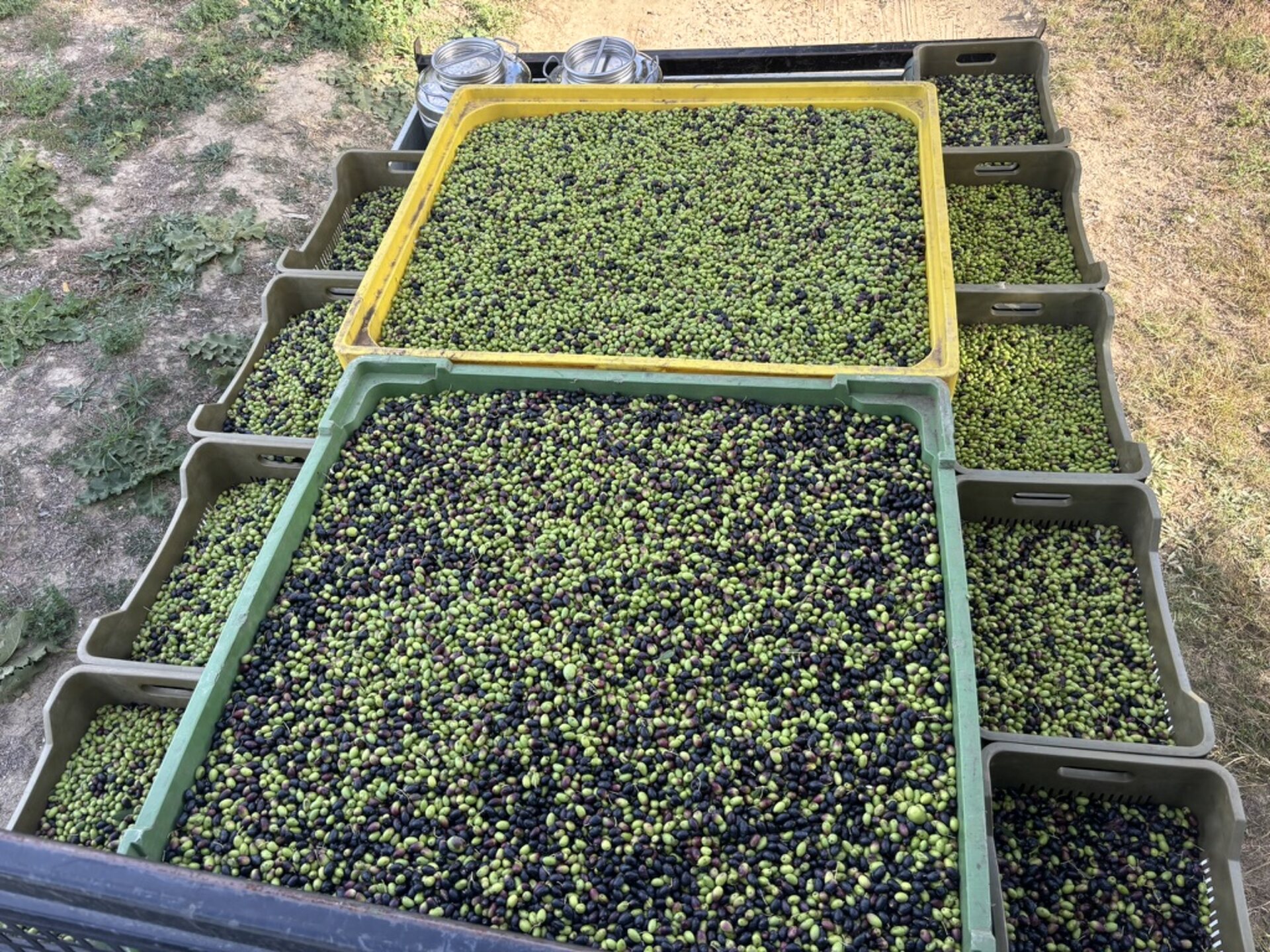
Never treated. Never forced to produce more. Picked on the right day, milled within eight hours, organic. This is how Kalanè is born.
No phytosanitary products · No chemical fertilisers · No forcing
Gaya's olive trees receive no treatment. No fungicides, no insecticides, no synthetic fertilisers, no forced irrigation, no aggressive pruning to boost yield. They live as if we had lived alongside them for a hundred years without disturbing them. They produce less — and they produce more pure.
Olive trees
Mostly centuries old, some monumental
New olive trees
Planted recently
Treatments
No phytosanitaries, no synthetic fertilisers
Tree → mill
The olive doesn't wait. Nor do we.
Five steps, no shortcuts. This is the difference between an ordinary oil and one worth 0.1.
The olive tree grows on its own. We don't treat, we don't fertilise chemically, we don't force. The soil feeds itself, beneficial insects come back. It's the first work, and it's not-working. The little we do is sowing field beans and other legumes as green manure to fix nitrogen in the soil, and flail mowing at the end of the cycle — never with a rotary tiller, which would break the soil and destroy the humus and microfauna that live in it.
On centuries-old olive trees, trunk shakers that split the roots don't work, nor do bar combers that tear the branches. We use a hydraulic comb harvester mounted on the excavator — flexible teeth working from outside the canopy — to reach even the tallest trees without damage, and battery-powered harvesters for selective picking. Tools chosen to respect the trees, not to squeeze them.
Once picked, the olive starts to ferment. Our olives don't wait: from field to mill within a few hours, always the same day.
Cold pressing at low temperatures in a certified organic mill, where treated olives never pass through. Heat would degrade the oil: it's kept low at the cost of yielding less.
Filtration with cellulose filters — only pressed paper, no chemistry, no solvents. Then storage in stainless steel tanks under a nitrogen atmosphere: the space above the oil is inert, oxygen does not enter, aromas and polyphenols stay intact for months. It's the top of oleological conservation.
Bottling happens when an order comes in, not in batches. The bottle you receive was filled the same week.
Gaya's olive grove is 11 hectares of organic grove, on the hills of Calanna facing the Strait of Messina. The trees are the Ottobratica cultivar, a variety native to the province of Reggio Calabria — the name comes from the month of October, when the drupes reach the perfect maturity for harvesting. It's the traditional cultivar of these hills, the fruit of a Calabrian olive culture rooted in the Middle Ages.
In recent years we have replanted 200 new olive trees and another 330 trees including figs, ancient fruit trees, oaks, maples, lindens and forest species — five hundred and thirty trees in all. Today's oil is born of that choice.
"We don't need to produce a lot.
We need to produce pure."
The farm has been registered as an olive producer since 2019, authorised for direct sale since 2021, for bottling since 2024. All transparent, all in order, all in the family. A vintage of Kalanè typically gives us an acidity around 0.1 — 0.2: it isn't a promise, it's what comes out when the soil is respected.
Four formats. Dark glass to protect from light, tin for big consumers, always with original seal.
Indicative prices · to be defined and confirmed
For now no shopping cart: Paolo receives your message, tells you the total (with shipping), you make the bank transfer, the oil ships. The old-fashioned way, but more transparent than many platforms.
The online shop will come. For now, the best way to order is to write.
PDO/PGI and other local certifications to verify and add.